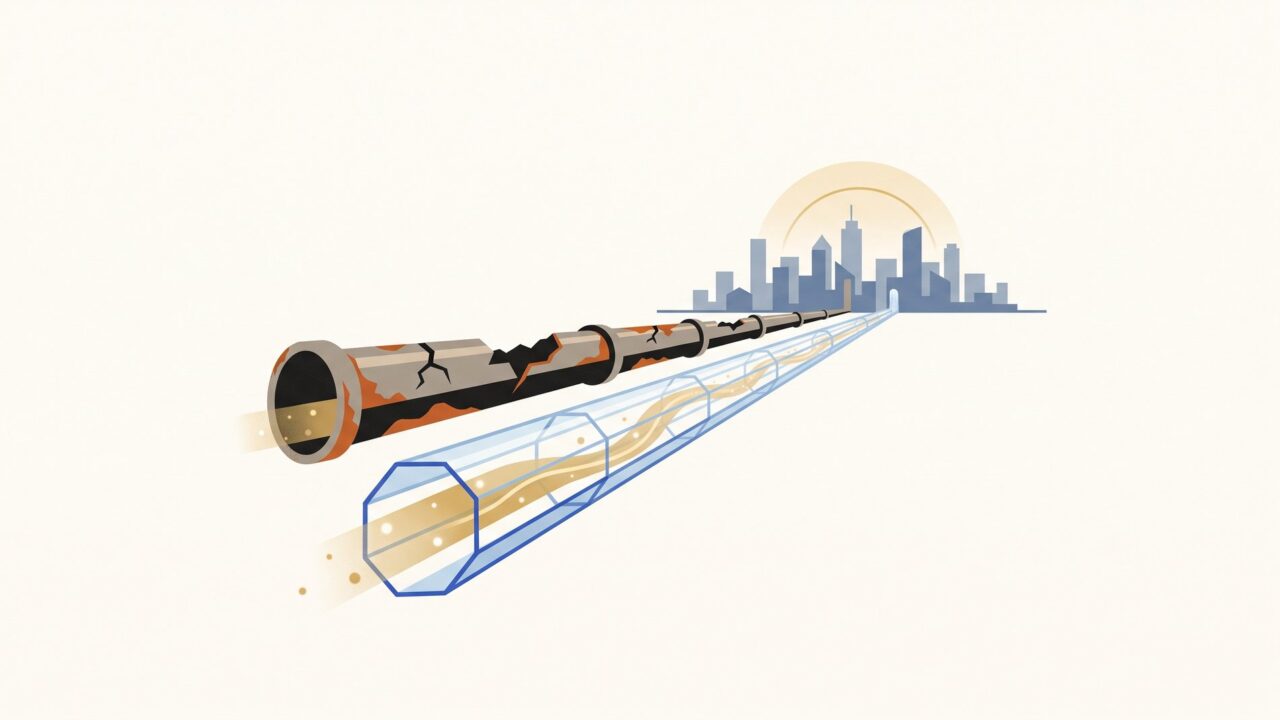
On October 15, 2025, six companies that normally compete (Yahoo, PubMatic, Scope3, Optable, Swivel and Triton Digital) launched an open standard called the Ad Context Protocol, or AdCP. It defines how AI agents exchange structured data about audiences, inventory and campaign objectives, so a buyer’s agent and a seller’s agent can transact without a human clicking through a UI.
I have been buying media for 22 years, and I currently manage over $80,000 a month in ad spend across the US, EU and APAC. I ignore most adtech launches, because most adtech launches are a press release wrapped around a sales deck. This one I did not ignore. A few months later, I joined the Agentic Advertising Organization, the trade body forming around this shift, as an Explorer member.
Here is why.
The last time the pipes changed, the pipes picked the winners
Programmatic did not win because it was elegant. It won because OpenRTB gave everyone a common wire format, and once the plumbing existed, the money followed. By 2023, programmatic accounted for 90% of all US digital display advertising, with eMarketer expecting the segment to approach $180 billion by 2025.
I lived through that transition as a buyer, and one lesson stuck: whoever writes the protocol shapes the market. The platforms that defined OpenRTB’s mechanics also defined its economics, including the fee layers buyers then spent a decade trying to audit.
Agentic advertising is the same movie on faster film. AI agents that discover inventory, negotiate price and execute buys are no longer a concept deck. The protocol layer for them is being written right now, in public, with the AdCP code already live on GitHub. Digiday describes AdCP as “the OpenRTB for the AI era.”
What AdCP actually is
AdCP is built on Anthropic’s Model Context Protocol, the same open standard the major AI labs converged on in 2025 for connecting models to tools and data. The initial release covers media buys, curation and audience activation. Instead of auctioning individual impressions in a hundred milliseconds, agents can transact on audience segments, packages or campaign outcomes, negotiated directly between a buyer’s agent and a publisher’s sales agent.
That direct part matters. Every dollar that moves agent-to-agent through an open, inspectable protocol is a dollar that does not have to move through a closed platform whose reporting I take on faith.
I have spent years inside the closed version of automation. On one e-commerce account, an automated campaign type beat my hand-built structure on efficiency, and I still could not get a clean answer on where the ads had actually served. The performance was real. The visibility was not. If agentic buying inherits that model, we get black boxes negotiating with black boxes, and a monthly invoice as the only artifact. An open protocol with a public spec is the alternative.
Why the AAO, specifically
The Agentic Advertising Organization is a Delaware 501(c)(6) nonprofit trade body founded in 2025 around three pillars: open standards (AdCP), education and governance, with a stated mission of keeping humans in the decisions that matter. Its bylaws call for a 40-director elected board drawn from four member categories: brands, agencies, publishers and technology providers, with formation guided by Randall Rothenberg, the former IAB CEO.
Notice what that structure implies. Buyers get seats, not just platforms.
I joined for three reasons. First, I run an AI automation practice and do independent technical review work on AI adtech, so I read these specs professionally anyway; I would rather read the drafts as they form than adapt to the final rules later. Second, much of my client base is small and mid-size advertisers, and the history of adtech standards is a history of enterprise voices drowning out everyone else. Third, the governance pillar, the part about boundaries, approvals and audit trails for agents, is the part I think will decide whether any of this works, and it is the least glamorous room in the building. Those rooms need practitioners who spend real budgets.
The sober math, and where I land
None of this means agentic advertising will eat your media plan by Christmas. Gartner’s June 2025 research note on agentic AI is the cold shower worth taking:
Over 40% of agentic AI projects will be canceled by the end of 2027, due to escalating costs, unclear business value or inadequate risk controls, according to Gartner.
The same Gartner release predicts that at least 15% of day-to-day work decisions will be made autonomously by agentic AI in 2028, up from 0% in 2024. Both numbers can be true at once. Most projects will die, and the survivors will quietly take over real decisions, including media decisions.
That combination, a high failure rate plus an inevitable direction, is exactly the argument for standards. Companies come and go; a good protocol outlives them all. Nobody remembers most of the ad networks of 2010, but OpenRTB still moves the large majority of display dollars.
I am not rebuilding client stacks on AdCP this quarter. Google and Meta will take the bulk of my budgets for a while yet, and the protocol is months old. But I refuse to repeat the programmatic decade, where buyers showed up after the rules were set and spent years reverse-engineering the plumbing through fee audits. This time the spec is open, and the organization forming around it includes buyers by design. Being in the room early is the cheapest option on the agentic future I will ever get. So I took it.